FOOD SECURITY- Rice for three meals could face repercussion on our security

“One of our primary objectives is to be self-reliant. When we talk about self-reliance it means that we should be able to stand on our own, without depending on others.” - His Majesty The King
FOOD SECURITY- Rice for three meals could face repercussion on our security


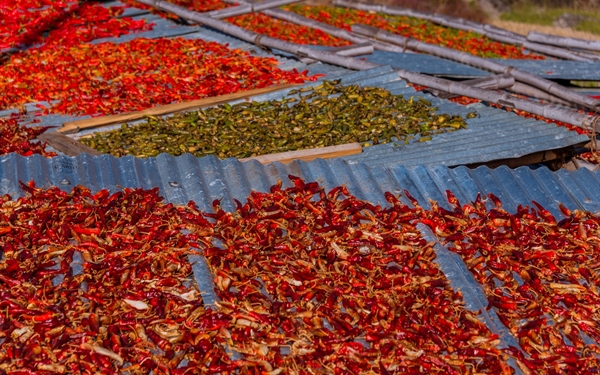
The first thing you see when you are about to land in Paro International Airport is the terraces of the paddy fields; vibrant green during plantation time and beautiful yellow during the harvest time. Village hamlet and international Airport are located in the middle of acres of paddy fields. Rice is the staple food for more than half of the world’s population, mainly Asian countries. Bhutanese rice has been a part of our traditional diet. Red rice grown in the western part of Bhutan is a great source for carbohydrates. Bhutanese red rice is also exported to other countries in the world. Natural Bhutan is one of Bhutanese based firm that exports organic Bhutanese products. 

Rice still makes up for a dominant portion of our Bhutanese diet for most of the households consume rice for all three meals on daily basis.
Bhutan is covered with 38,394 square kilometers with a population of 736,100. Although the size and the population are proportional because of its location in the Himalayan ranges, the majority of our country is either too steep or too cold for farming. With 83.9 percent of forest coverage, the arable land makes up for 2.62 percent of the total land only. Out of which only 319.1 square kilometers are irrigated land. Thus Bhutan is only 47 percent self-sufficient in rice.

It is said that, in the 1960s, Thimphu used to be just a cluster of few houses surrounded by acres of paddy fields. But now, due to urbanization, a huge portion of our agriculture land has been converted into dry- land for the development of infrastructure. All we see are buildings sprouting everywhere. There are hardly few paddy fields left.
Further, on top of all the urbanization challenges, it is economically difficult for our farmers to compete with the rate of imported rice in the market. People opt to buy imported rice or the locally produced due to cost factors, which leaves our farmers discouraged to do large scale production. Our farmers don’t earn enough for the resources and time invested in rice farming.


Because of our landlocked status and the cold harsh terrain in the north, we sought our trade arrangements/relations in the South, with India. India is the primary and major source of Bhutan’s import. As per the Bhutan Trade Statistic, in 2018 alone, Bhutan has imported goods worth Nu. 59.81 billion from India. Out of which, the top 7 commodities to be imported were rice worth Nu. 1.689 billion.


Ministry of Agriculture and Forest has set its target to achieve 65 percent of self-sufficiency in rice. Their primary effort has been put in farm mechanization. But we must realize that most of our terrains are too steep for machines. Moreover, these cultivable lands are fragmented and scattered in most of the remote places.


FOOD SECURITY


Bhutanese has to understand that we can’t change our geography. But that shouldn’t stop us from making the most of what we have. We didn’t import rice during the times of our forefather; our farmers could produce enough and we were self-sufficient in rice. Therefore, when it comes to a simple choice, while at the market for shopping, Bhutanese should make an effort to promote local products, even if they are a little expensive than imported goods. If we don’t encourage our farmers, who will?


The survival of our nation between two globally powerful nations takes constant effort. We have to consider the consequences of every decision and we cannot afford to be reckless when it comes to the security of our nation. Therefore, we have to take food security seriously. Our dependence on other countries for basic food could highly impact our independence. The security of the country shouldn’t be only about border security, Bhutanese must rethink of Food Security.



Related Posts

Bhutan Becomes First Country to Adopt Gross Ecosystem Product...

Bhutan has become the first country to adopt Gross Ecosystem Product nationally, valuing its ecosystem services at...

Sep 25, 2026 10:28

How the Restoration of an 18th-Century Temple Is Helping Preserve...

Bhutan's Royal Family attended the consecration of the restored Pelri Dorjidhen Tsulakhang in Nobgang, Punakha, as part...

Sep 21, 2026 10:16

International Magician Patrick Kun Performs for Students in...

International magician Patrick Kun visited Nazhoen Pelri School in Bhutan, combining close-up illusion with lessons on...

Sep 18, 2026 16:30

Bhutan and India Mark New Milestones With Three Major Development...

Bhutan and India marked new milestones in their partnership with projects in hydropower, healthcare and connectivity,...

Sep 18, 2026 14:52

Bhutanese Artist Pem Lham Receives 2026 Rubin Museum Himalayan...

Bhutanese artist Pem Lham has received the 2026 Rubin Museum Himalayan Art Prize, a USD 30,000 international award...

Sep 15, 2026 10:02

Japan-Supported Medical Equipment Strengthens Healthcare in...

Bhutan has deployed nearly USD 3 million worth of Japan-supported medical equipment across six eastern districts as...

Sep 10, 2026 10:18

Latest

News

Bhutan Becomes First Country to Adopt Gross Ecosystem Product Nationally

Bhutan has become the first country to adopt Gross Ecosystem Product nationally, valuing its ecosystem services at approximately US$6.2...

Sep 25, 2026 10:28

How the Restoration of an 18th-Century Temple Is Helping Preserve Nobgang's Heritage

Bhutan's Royal Family attended the consecration of the restored Pelri Dorjidhen Tsulakhang in Nobgang, Punakha, as part of wider efforts to...

Sep 21, 2026 10:16

Features

From Chhukha to Eurovision Asia: Thukten's Journey to Bhutan's Biggest Music Stage

Thukten Nyendra, a 24-year-old Bhutanese singer-songwriter whose journey from a childhood love of music to winning Rhythm of Bhutan will...

Aug 19, 2026 16:53

Passion & Purpose: Finding Meaning on Bhutan's Mountain Trails

Discover how Bhutanese trekking guide Bijay Ghalley found purpose in the mountains, sharing stories of resilience, nature, and human...

Aug 06, 2026 13:07

Business

From Australia to Wangdue: How a Bhutanese Couple Built a Business Back Home

After more than seven years in Australia, Yeshey Choden and Dawa Gyeltshen returned to Bhutan to raise their daughter and build Acho Daka, a...

Aug 11, 2026 15:45

Bhutan recognised first four Geographical Indication products

Bhutan has officially registered its first four Geographical Indication products, protecting traditional goods while creating new...

Jul 06, 2026 14:29

Sports

Bhutan and Malaysia Sign First Olympic Cooperation MoU at Asian Games

Bhutan and Malaysia have signed their first National Olympic Committee cooperation agreement during the Aichi-Nagoya 2026 Asian Games, with...

Sep 22, 2026 17:40

Is HYROX coming to Bhutan? A teaser has fitness enthusiasts talking

HYROX has teased the possibility of coming to Bhutan, potentially with its highest-altitude race yet. Are you ready?

Aug 07, 2026 13:43

Tourism

Black Mountain Festival Returns to Trongsa This October

Trongsa’s Black Mountain Festival returns on 3 and 4 October 2026, following a five-day journey through all five gewogs celebrating...

Sep 02, 2026 10:55

Bhutan Expands 24-Hour SDF Waiver Access in Phuentsholing

From September, regional tourists using Bhutan’s 24-hour SDF waiver can visit Milarepa Lhakhang and Pachu Community Ecotourism Site as part...

Aug 18, 2026 12:30

Lifestyle

Thruebab in Bhutan: Why Blessed Rainy Day Is About Water, Not Rain

Discover the meaning of Thruebab, Bhutan’s Blessed Rainy Day, and the beliefs and bathing traditions behind this September celebration.

Sep 23, 2026 15:18

A Different Way of Seeing: Returning to Bhutan with Leica

What changes when you slow down behind the camera? Discover a more mindful approach to photography in Bhutan.

Sep 07, 2026 11:06

GMC

Child Safeguarding Gains Focus in Gelephu Schools

A school programme in Gelephu is strengthening awareness of child safety, sexual exploitation, harassment, reporting mechanisms and...

Sep 11, 2026 10:27

Building a Stronger Foundation for Early Childhood Education in Bhutan

Established in 2024, BECEDA is bringing Bhutan's private ECCD providers together to strengthen educator training, early learning standards,...

Aug 13, 2026 09:56

Subscribe to our newsletter

Never miss out on new happenings and news stories!

newsletter

Download Daily Bhutan Mobile App

Connecting with us just got easier!

android app
apple app